

Europe is in the middle of a student-housing and hostel refurbishment wave. University housing operators in Germany are pulling loft-bunk replacements forward, and contract buyers across the continent are re-tendering dormitory furniture faster than they have in years. Into that demand walks a rule that catches a lot of first-time EU importers off guard.
Here is the part that trips people up. Metal bunk beds sit under customs code 940320, and at the border the duty is light, often zero. The tariff is not your problem. Compliance is. Since 13 December 2024, the EU's General Product Safety Regulation (Regulation (EU) 2023/988, or GPSR) has applied to every consumer product placed on the market, furniture included. If you are a distributor, hostel operator or tender buyer importing bunk beds, the real cost of entry quietly moved from customs to paperwork.
One honest caveat before we go further: always check your exact eight-digit code and country of origin in the EU's TARIC database. Anti-dumping and anti-circumvention measures on steel and aluminium parts can change the landed cost mid-year, and no blog, including this one, can tell you your current rate.
What GPSR actually asks of you
GPSR is not a certificate you buy off a supplier. It hands duties to whoever puts the product on the EU market, and three of them decide whether a bunk-bed shipment clears cleanly.
- An EU responsible person. If the manufacturer sits outside the EU, which ours does, an economic operator established in the Union has to be named: the importer, or a representative the manufacturer appoints in writing. Their name and address go on the product, the packaging or the accompanying documents, and in the online listing. A supplier's "CE certificate" does not cover this. It is a separate requirement, and it is the one most buyers skip.
- A technical file, kept for ten years. It must hold a real risk assessment: what could go wrong with this bed, how likely it is, and what was done about it. A one-line supplier declaration is not a risk assessment. The file has to outlive your relationship with the factory, so collect it while you are still buying from them, not when an inspector asks and the plant has stopped answering email.
- Traceability and language. Type, batch or serial number, plus manufacturer and importer details. Warnings and safety text go in the language of every country you sell into. An English-only label is non-compliant in Germany, France and Poland, however safe the bed itself is.
Then the bunk-bed standard: EN 747
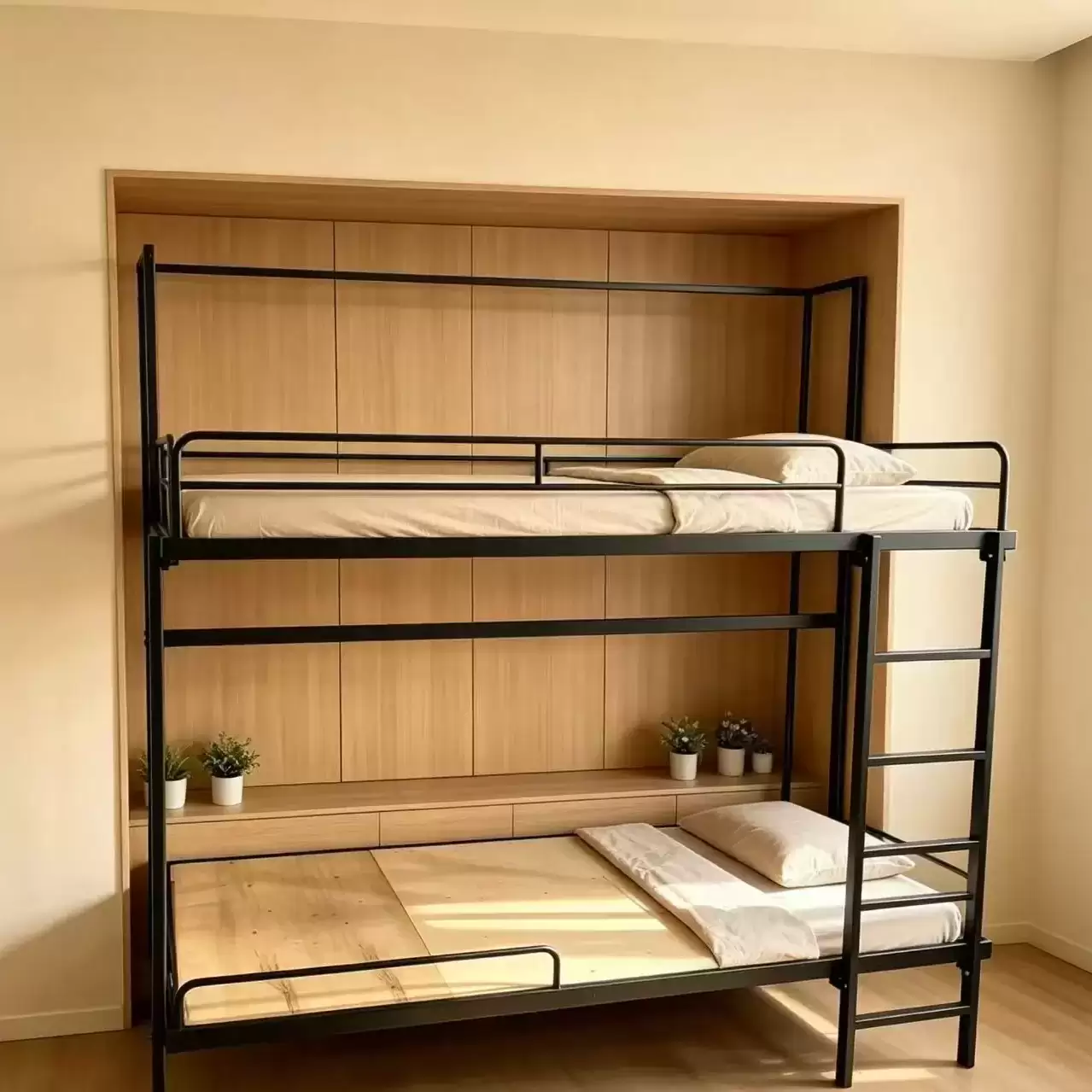
GPSR is the umbrella. The bunk-bed detail lives in EN 747, the harmonised standard for bunk beds sold in Europe. It fixes the structural loads, the guardrail geometry and the maximum gap dimensions that stop a child's head or limb getting trapped. In a tender, "EN 747 compliant" is the line that does the work. But ask which clauses the factory actually tested against, and get the report, not a logo stamped on a drawing.
There is a coating wrinkle too. REACH restricts lead, cadmium and hexavalent chromium in the paints and galvanic finishes on metal furniture. A cheap powder coat that fails a chromium-VI test will pass your visual check and still get stopped at the border. Ask for the coating test report with the batch number, the same way you would ask for a steel mill certificate.
Why the timing favours buyers who spec properly
The market is moving your way. Contract and hospitality demand is the fastest-growing slice of the European metal-furniture market; IndexBox puts hospitality growth ahead of residential at roughly 3 to 5 percent a year, and student accommodation construction is a big driver. More factories are chasing the same tenders, which means the ones that can produce a full EN 747 documentation package now compete on more than unit price. That is an advantage you did not have three years ago.
It also means the losers are the vague specs. The most common failure we see is a tender that asks for "steel bunk beds" and stops there: no load figure, no standard, no coating spec. That vagueness is exactly what lets a non-compliant bid come in 15 percent under yours and win on price alone.
A five-line checklist before you sign
- Name the standard. EN 747, with the specific clauses and the test report attached to the bid.
- Name the load. The common floor is about 120 kg per berth. We test our frames to 200 kg per berth through SGS, and we also quote a 120 kg build for budget rooms. Decide which one you are buying, in writing.
- Get the paperwork in the bid. Technical file and Declaration of Conformity, not "available on request".
- Confirm the coating. REACH-compliant finish, with the batch test report.
- Sort labels early. Local-language warnings per destination country, and the EU responsible person's details on the packaging.
What we bring to the table
Zehao builds institutional metal bunk beds for dormitory, hostel, school and correctional projects, and we run the full bunk-bed range as OEM and ODM. Every frame ships with its EN 747 test data and a Declaration of Conformity your importer can drop straight into their GPSR technical file. We quote real MOQs and lead times, and we will give you the 40HQ container-loading count up front so your landed cost per berth is a number, not a guess. If you are weighing a dormitory fit-out or a hostel refurbishment this cycle, that is the conversation worth having now, before the tender locks the spec.
Writing a 2026 or 2027 dormitory or hostel tender and want the EN 747 spec sheet plus a sample compliance pack? Reply here or send us the project details, and we will send the documents back the same week.
 2023/988 and EN 747 are the real gate. A 2026 compliance and spec checklist for dormitory and hostel furniture buyers.)