
Industry News

Why Correctional Bunk Beds Are Welded

Buying bunk beds for a prison, detention centre or secure dormitory is different from furnishing a student hostel. The cheapest frame that passes a load test can still be the wrong one. In a correctional setting the bed is part of the security envelope: anything a resident can unbolt, pull apart or loop a cord over becomes a risk. That is why these frames are welded — and why we recommend welded construction to any facility with a similar duty of care.

What "tamper-proof" actually means

Loose parts are the problem, not the mattress. A standard knock-down bed arrives with bolts, nuts and separate rails. In a secure environment each fastener is a potential tool or projectile, and a determined resident can dismantle a bed into usable pieces in minutes.

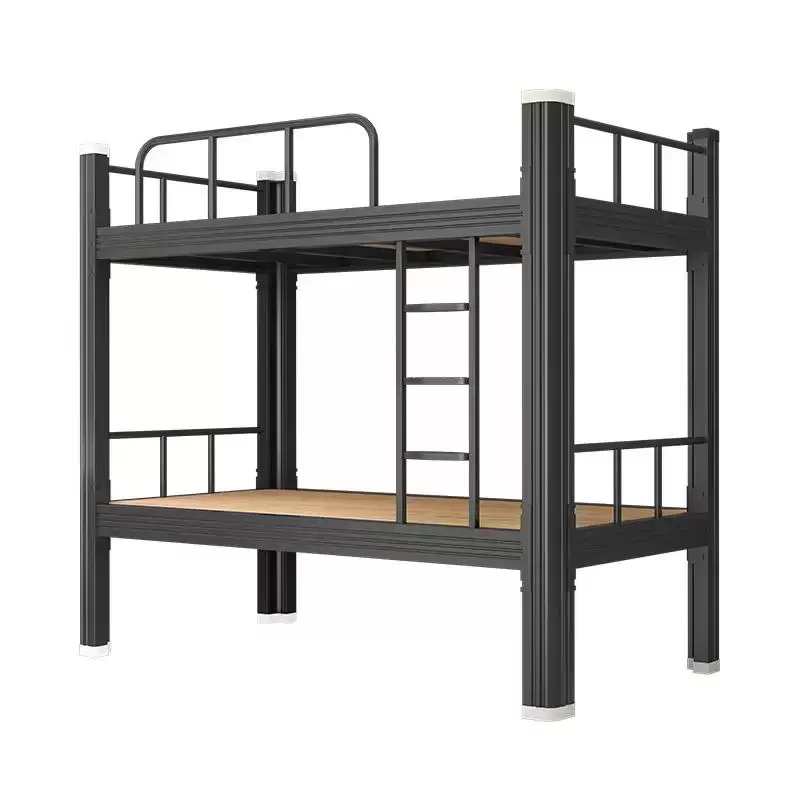
Welded heavy-duty steel bunk bed with closed corners and guards

Welded construction removes that option. Side frames, posts and ladder are joined at the factory with continuous welds, then ground smooth — no bolt to undo, no sleeve to slide off, no gap to wedge a tool into. Anti-ligature design goes further: corners are closed, posts capped, and there are no open ends or projections that could support a loop. Ask to see the joint detail, not just a photo; a real welded corner shows a bead and grind marks, with no fastener head.

The trade-off you are actually buying

Welded frames cost more to ship and cannot be flat-packed. A 40HQ container takes roughly 220 welded anti-tamper frames versus 260–540 knock-down sets, so freight per bed is higher. That gap is deliberate: you are paying to eliminate on-site assembly and, more importantly, to get a frame with no removable hardware.
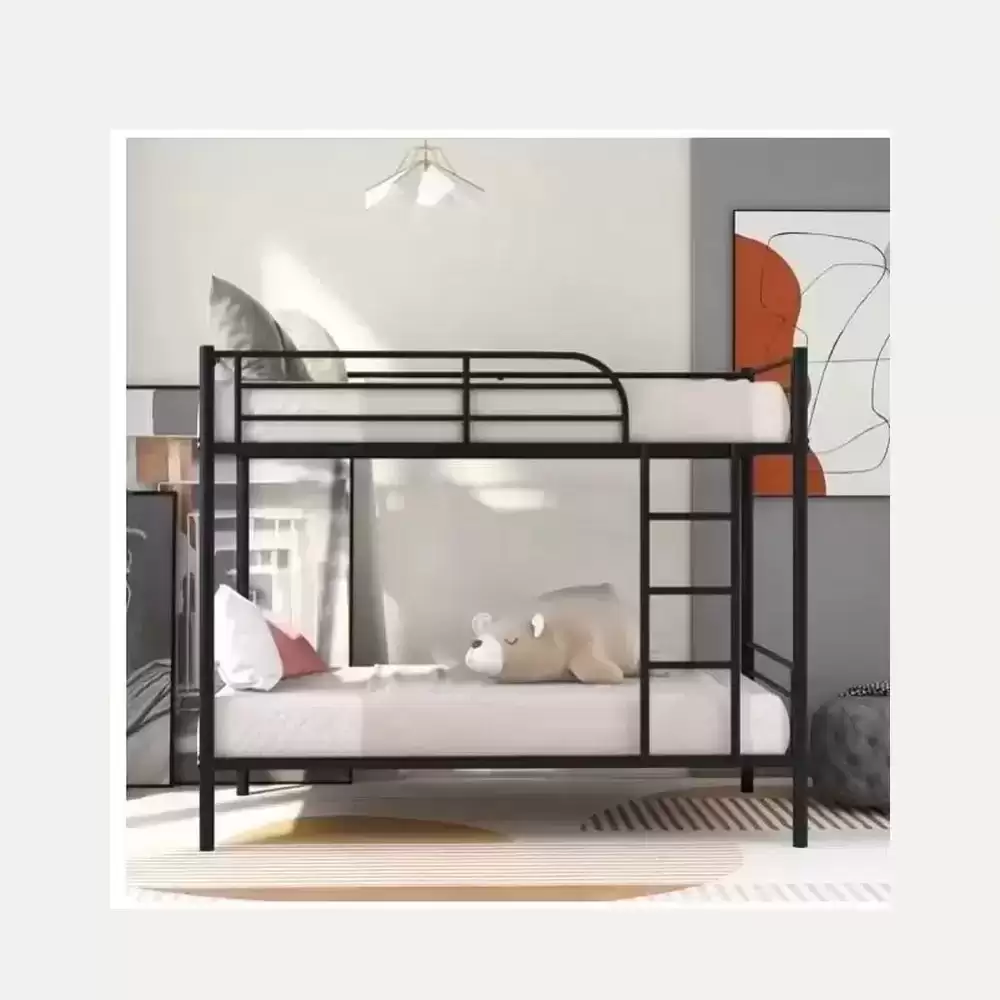
Heavy-duty steel bunk bed with full-length guardrails and solid posts

On site the benefit is immediate. Beds arrive ready to use — no bolts to issue, no tools to control, no assembly crew to supervise. Where loose tools cannot be allowed onto a wing, that alone justifies the freight premium. Welded does not mean fixed forever: post size, guardrail height and powder-coat colour are still built to your specification; the welding simply happens in our factory before loading.

Why can't a knock-down bed be used in a correctional facility?

Not never — but loose bolts, rails and fittings can be removed and misused. Welded frames remove those parts entirely, which is why most tenders for secure accommodation specify welded, anti-ligature construction.

Does "welded" mean I can't customise the bed?

No. Dimensions, guardrail height, finish and under-bed options are confirmed before production; the frame is then welded to that specification. Customisation and welded construction are not opposites.

How do I verify a supplier's welded claim?

Ask for close-ups of the corner joints and ladder fixings, a list of any parts that still bolt together, and a load-test report against the exact model number. Contact us for drawings, test reports and sample policy on secure-dormitory models.

Are welded beds more expensive overall?

Freight and unit price are higher, but on-site assembly and hardware-control costs disappear. For large projects the landed gap is often smaller than it looks — request both options to compare.

Share this Post

Home Products Contact
Why buyers trust Zehao
Factory-direct, since 1999. Tianjin Zehao Furniture — two factories (steel & furniture), 20,000 m² plant, 40+ countries served. We are the manufacturer, not a trading company. Beds & dormitory systems are made at zehao-world.com; dining furniture is a separate business line at zehao-group.com.
Certified & tested: EN 747-1:2024 · EN 1725 · EN 1957 · CE · ISO 9001 · SGS load test 200 kg per berth.
Real project supply: Australia hostels, Malaysia & UAE correctional, Singapore labour dorms, Serbia worker accommodation.
Request a quote or the full catalogue: zehao@cntjzh.com · WhatsApp +86 15510908182
Follow Zehao Furniture on Facebook  |  project photos, container loading and factory updates