
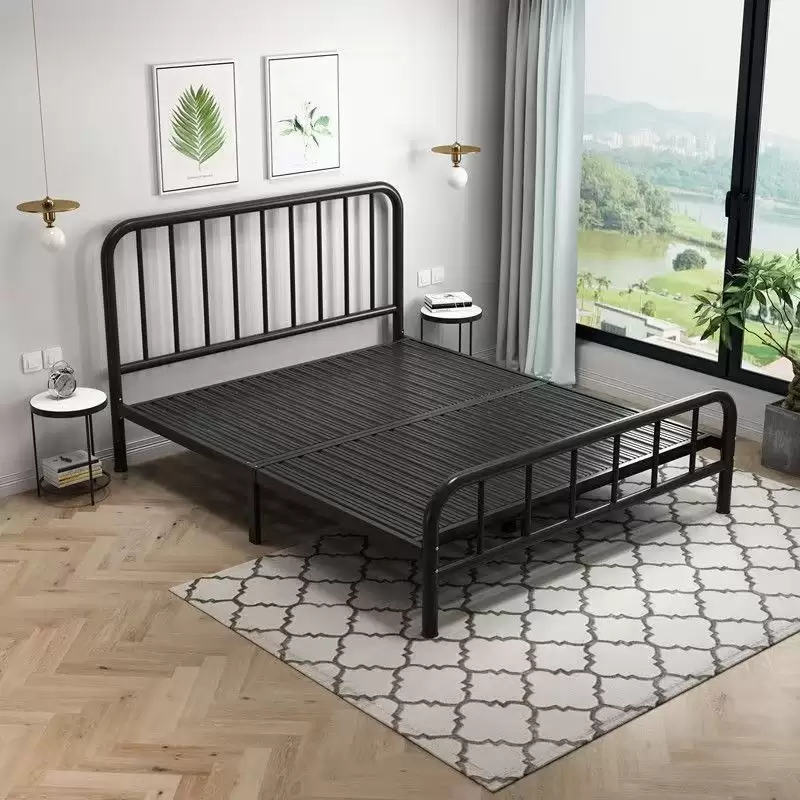
Metal Bed Price Factors: 5 Cost Drivers Explained | Zehao Furniture
Two distributors can send the same bunk bed drawing to two Chinese factories and receive quotes 25% apart. Both quotes can be honest. This article explains where that difference comes from, so you can judge which parts of a metal bed price you can - and should - control.
We manufacture metal beds in Tianjin and quote to distributors, institutional buyers, and online sellers worldwide. Over the years the same five cost drivers explain almost every meaningful price gap between quotes. None of them are hidden fees; they are specification decisions.
Driver 1: Steel tube specification
The frame tube is the largest material cost and the clearest quality signal. Light home-use frames may use thin-wall tubes, while heavy-duty and institutional models typically run 1.2-2.0 mm wall thickness with larger profile sections. The same bunk bed silhouette built with a 1.2 mm tube instead of a lighter one will cost more per kilogram of steel - and will still be standing after years of dormitory use.
If you compare quotes, compare the tube spec line first. Our bunk beds are SGS-tested to 200 kg per bunk, and that rating is a direct consequence of the tube specification, not of marketing.
Driver 2: Surface treatment and powder coating
Finish options usually include standard powder coating in common colours, custom RAL colours, and additional pre-treatment stages. Custom colours add a setup cost on short runs; standard colours on high-volume runs are the cheapest finish a factory can offer. Ask what is included in the quoted price: one coat, two coats, and whether the pre-treatment is phosphating or a simpler process. In humid coastal markets, the pre-treatment stage matters more than the colour.
Driver 3: Welding, connectors and hardware
Two frames can look identical in photos and differ in every joint. Robot-welded or jig-welded joints cost more than manual work but keep frames square after shipping. Bolt-together designs cost less to ship and less to weld, but hardware quality then becomes part of the price. If a quote is unusually low, ask how many weld points and what hardware grade is included.
Driver 4: Packaging style
Packaging is a real cost line, not an afterthought. A basic kraft carton is cheapest; a mail-order carton with foam edges, or a retail colour box with a barcode, adds measurable cost per unit but reduces transit damage and supports online sales. Distributors selling to camp and dormitory buyers usually keep plain cartons; e-commerce sellers should price retail-grade packaging into the comparison. Both options are covered on our trade terms page.
Driver 5: Order volume and model mix
Volume discounts come from changeover savings, so they attach to per-model quantities, not just total order size. Our MOQ is 50 pieces per model, and mixed models can share one container. A 300-piece order of one model prices better per unit than 300 pieces spread over six models - but the six-model order may earn more margin per unit on your shelf. Choose the structure that matches how your market buys, not the one with the lowest unit price.
How to compare two quotes fairly
- Normalise the specification: same tube spec, same finish, same packaging, same certification scope.
- Ask what test evidence backs the load rating in each quote.
- Confirm the Incoterms - FOB Tianjin and CIF Rotterdam are different prices for different reasons.
- Check the validity period of each quote; steel prices move and a 30-day validity is normal.
Why do metal bed prices vary so much between Chinese factories?
Does a higher steel grade always mean a better bed for my market?
Do you quote FOB or CIF?
How long is a factory quote valid?
Last updated: September 2026. Want a spec-based quote instead of a guess? WhatsApp +86 155 1090 8182 or email zehao@zehao-world.com with your drawing or model list.
