
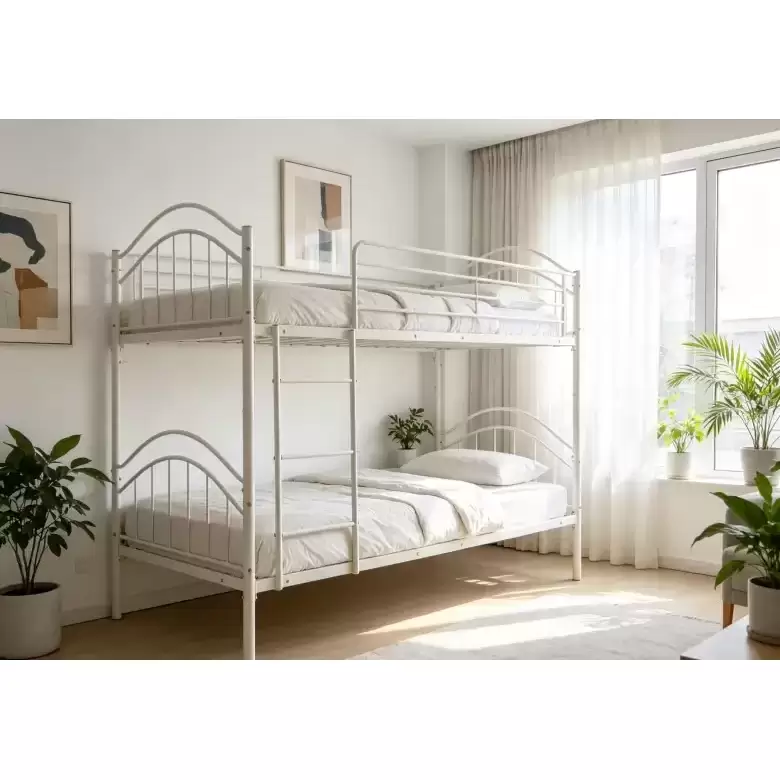
Australia replaced its bunk-bed safety standard in June, and plenty of tenders still name the old one. AS/NZS 4220:2026 — "Bunk beds and other elevated beds" — superseded the 2010 edition on 26 June 2026. If you are buying for a mining camp, a hostel, a holiday park or a student accommodation block, the version number in your spec now does real work. It decides which suppliers can bid and which beds pass inspection.
The headline change is a two-tier performance system. Level 1 covers general domestic use: a child's bedroom, a low-traffic guest room. Level 2 covers severe domestic and commercial use — camps, holiday parks, dormitories, mines and correctional facilities. For anything with high turnover and hard use, Level 2 is the threshold a competent specification names. Not "bunk beds" in the abstract. A level, an edition and a test method.
What the standard actually controls
AS/NZS 4220 sets the safety requirements for bunk beds and other raised beds sold into Australia and New Zealand. Four things matter for a camp or dormitory buyer, because they are the four things an inspector checks:
- Guardrails. Height and continuity on the open sides of the upper berth, plus the gap and spacing limits that stop a limb or head getting trapped. Guardrail height is measured from the top of the mattress, so mattress thickness belongs on the bed drawing, not in a separate schedule.
- Structural load. The load rating per berth, with a defined test method and a pass threshold you will accept as evidence. The common commercial floor is around 120 kg per berth. We test our frames to 200 kg per berth through SGS, and correctional grades run higher.
- The ladder. Angle, rung spacing and secure attachment. A wobbly ladder is the most common reason a bed gets rejected on a site walk-through.
- Finish and fixings. Anti-rust powder coating, and anti-tamper fasteners where the setting is institutional rather than domestic.

The procurement angle most buyers miss
A bunk bed is not compliant just because a supplier says it is. Ask for the actual load-test report — the lab, the method, the berth rating — not a certificate claim on a logo. And clarify who arranges and pays for AS/NZS 4220 verification on your specific project, because it is project-scoped, not automatic. Those two questions filter out most of the bids that will cause you trouble later.
The trade lane also works in your favour. Under ChAFTA, furniture from China enters Australia duty-free, while the general MFN rate on wooden furniture sits at 5 percent. If your freight and landed cost per berth is a number you have to defend to a finance director, that zero matters.
Where the demand is coming from
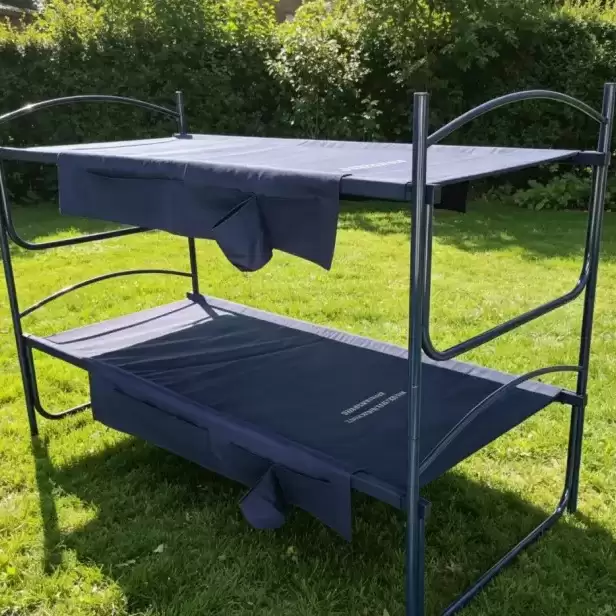
Two Australian sectors are pushing bunk-bed volumes right now. Student accommodation and training campuses are expanding to absorb record enrolment, and the operators there buy in bulk against a written spec. Mining and FIFO camps, meanwhile, replace beds on a hard-use cycle — a bed in a wet, high-turnover camp room fails faster than the same frame in a suburban bedroom, so the spec skews toward steel, stackable or foldable designs, and replaceable parts.
A five-point checklist for your RFQ
- State the standard and edition. AS/NZS 4220:2026, and name the level: Level 2 for camps, hostels, mines and dormitories.
- Name the load. Load rating per berth plus the test method and pass threshold you accept as evidence.
- Fix the ladder and guardrails. Guardrail height measured from the mattress top, ladder angle and rung spacing in writing.
- Ask for the report. Independent load-test evidence (SGS, named method), not a certificate logo.
- Confirm KD flat-pack and port terms. Knocked-down packing cuts sea freight into Melbourne, Sydney and Brisbane; get FOB Tianjin or CFR/DDP in writing.
What we supply for Australian projects
Zehao builds metal bunk beds on an EN 747-1:2024 structural basis with independent SGS load testing at 200 kg per berth, and we manufacture to the AS/NZS 4220 level your project specifies — supplying the EN 747 test reports, material certificates and drawings a government or NGO submission needs. For formal AS/NZS 4220 verification we arrange the local lab pathway with you up front, so scope, responsibility and cost are agreed before the order, not after the inspection. See our AS/NZS 4220 guide and the Australia compliance page for the clause-by-clause detail.
The numbers that matter: MOQ 50 sets per model, 25–30 days lead time after deposit, roughly 260–540 sets per 40HQ depending on model and packing, from a 20,000 m² Tianjin plant running 8,000-plus beds a month across 40-plus countries. If you are tendering an Australian mining camp or student accommodation this cycle, send us the quantity, the level and the destination port — we will return a buildable spec sheet, the FOB/CFR number and a mapped certification pathway the same week.
