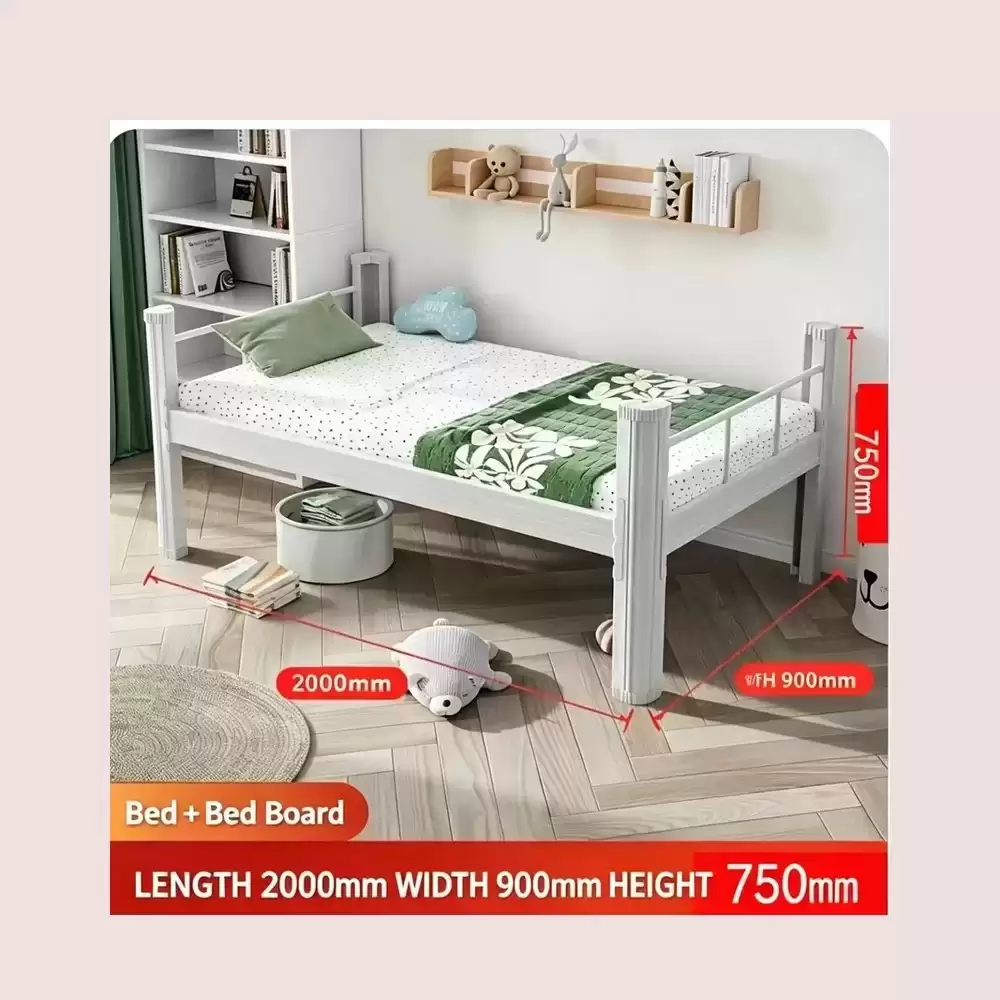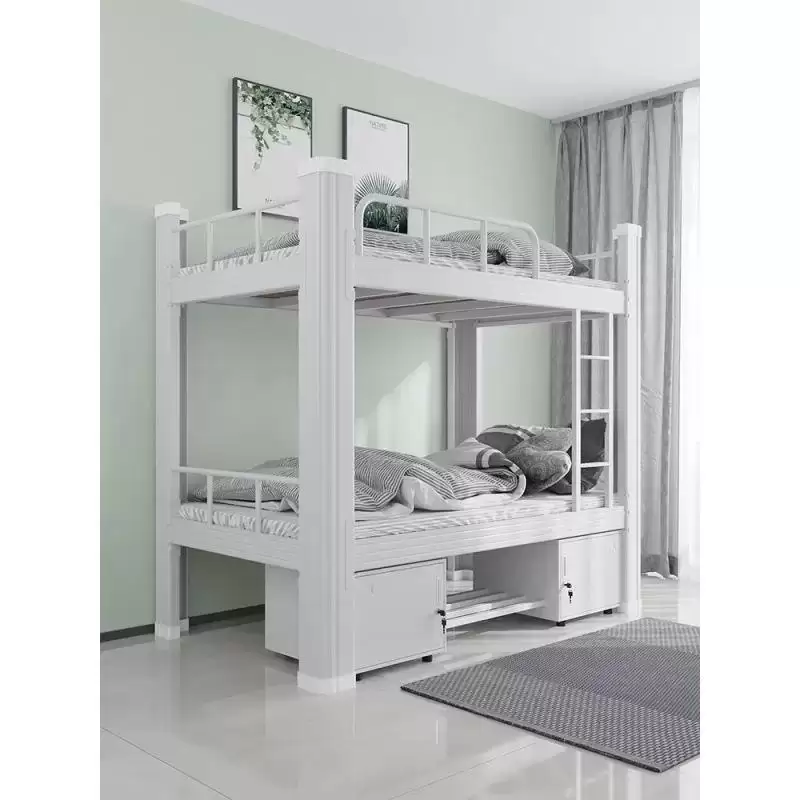
A bunk bed that creaks on night one becomes a maintenance ticket by month three. In a dormitory with 1,000 beds, noise and wobble are not minor annoyances — they drive resident complaints and repeat work orders. The good news: most of it is designed out at the factory, not fixed on site. Here is what causes it and what to write into your specification.
Why metal beds make noise and move
Three mechanisms cause nearly every complaint. Metal-on-metal squeak comes from oversized bolt holes or missing washers: each time a sleeper shifts, the corner posts rub and the frame creaks. Lateral sway comes from thin-gauge tubing or bolt-together frames without diagonal bracing — an adult climbing the ladder makes the whole bed flex. Rattling slats happen when drop-in metal slats or wire grids clatter against the side rails. The fix is a specification, not luck.
Specify the quiet out of the bed

Ask suppliers for four things in writing. First, tube section and wall thickness: 40 × 40 × 1.6 mm posts resist flex far better than 1.0 mm sheet sections. Second, joining method: welded corners with reducing-sleeve joints at the levels eliminate the rub points that bolted frames develop as they loosen. Third, slat seating: welded wire decks or slats seated in plastic/noise-dampening caps stop the rattle at its source. Fourth, fixings: lock nuts or nylon-insert nuts, plus a spare fastener kit, keep the bed tight after repeated moves. A 2% spare-parts ratio costs almost nothing and prevents a small squeak from becoming a returned container.